
Healthy Relationships
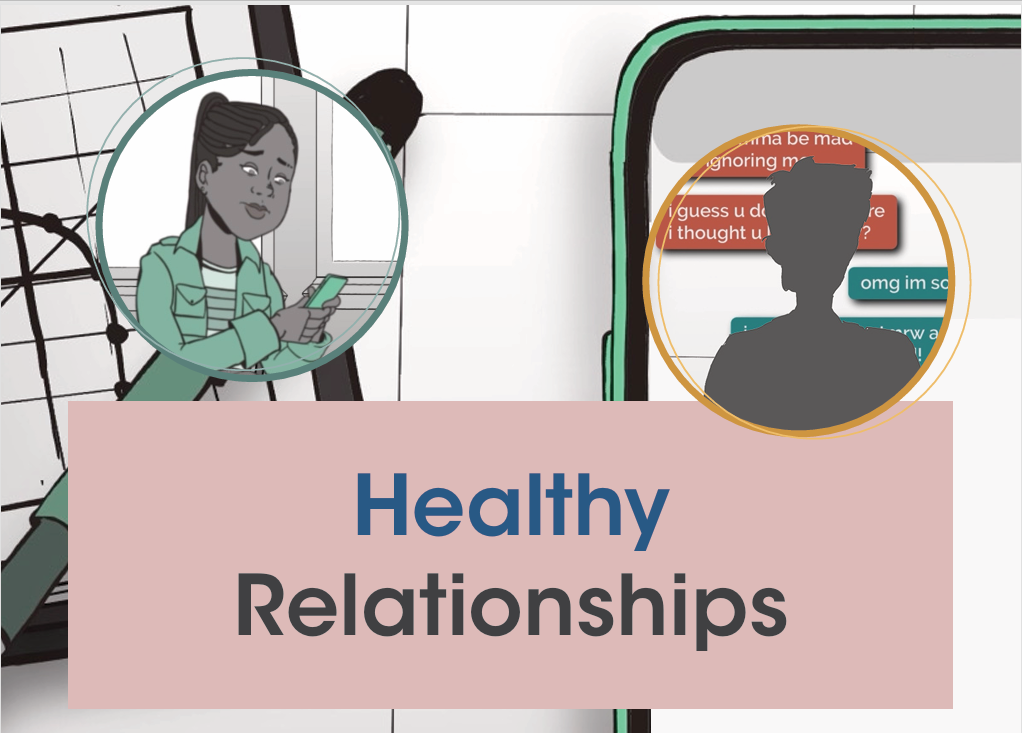
Download the Discussion Guide
The National Center for Missing & Exploited Children (NCMEC) offers free educational materials to help children and teens recognize and avoid unhealthy or exploitative relationships, both online and offline.

Healthy Relationships Checklist for Youth
Know Your Value
⬜ I feel respected for who I am
⬜ I don’t feel pressured to change to be accepted
⬜ I feel safe expressing my thoughts and feelings
Respect & Boundaries
⬜ I can say “no” without being pressured or made to feel guilty
⬜ My boundaries are respected—online and in person
⬜ I respect the other person’s boundaries too
⬜ I am never asked to do something that makes me uncomfortable
Communication
⬜ We communicate honestly without fear or pressure
⬜ I don’t feel manipulated, blamed, or controlled in conversations
⬜ Disagreements are handled with respect—not anger or intimidation
Freedom & Independence
⬜ I can spend time with friends and family freely
⬜ I am not constantly monitored, tracked, or questioned
⬜ I don’t feel isolated or cut off from others
Digital Safety
⬜ I am not pressured to send photos, videos, or private messages
⬜ My passwords and accounts are private
⬜ I understand anything shared online can be saved or shared again
⬜ I feel safe saying no to digital requests
Trust Your Instincts
⬜ I trust how I feel in this relationship
⬜ If something feels wrong, I take it seriously
⬜ I feel safe—not anxious, confused, or afraid
Red Flags (Warning Signs)
⬜ They try to control who I talk to or where I go
⬜ They pressure me for images, attention, or access
⬜ They use guilt, threats, or manipulation
⬜ They move the relationship too fast
⬜ They disrespect my boundaries
If you checked any of these, that’s a sign to pause, step back, and talk to a trusted adult.
Healthy Choices
⬜ I know it’s okay to walk away from something that doesn’t feel right
⬜ I have at least one trusted adult I can talk to
⬜ I understand that healthy relationships should never feel unsafe
Final Reminder for Youth
You deserve relationships that are: ✔ Safe
✔ Respectful
✔ Honest
✔ Supportive
Anything less is not something you have to accept..
Healthy Relationships: What They Are—and Why Our Youth Must Understand Them
Healthy relationships are not something young people should be expected to figure out on their own. They are something we must teach early, reinforce consistently, and model through our words and actions. In a world where influence is constant and relationships often begin and develop online, the need for clear, prevention-focused guidance has never been greater.
At their foundation, healthy relationships are built on respect, boundaries, honesty, and safety. They are environments where individuals feel valued, heard, and protected—not controlled, pressured, or diminished. This understanding is critical for young people, because without it, they are far more vulnerable to manipulation, coercion, and exploitation. When youth do not know what healthy looks like, they are more likely to accept behaviors that put them at risk.
This is not limited to dating relationships. It extends to friendships, peer interactions, and every connection that shapes how a young person sees themselves and others. Healthy relationships allow space for individuality. They do not demand constant access, nor do they isolate someone from friends, family, or support systems. They are built on communication that is honest and respectful, not driven by guilt, fear, or pressure. Trust grows over time and is supported by consistent actions, not empty words.
The reality is that today’s youth are navigating relationships in a digital environment where boundaries can be blurred and expectations can escalate quickly. Constant communication, social validation, and online influence can create pressure that young people are not always equipped to handle. Attention can be mistaken for care. Control can be misunderstood as protection. Manipulation can be misinterpreted as affection. Without guidance, these misunderstandings can lead young people into situations that become harmful very quickly.
This is why it is essential to talk openly about red flags. Unhealthy behaviors rarely appear all at once; they often begin subtly and intensify over time. A person who demands constant access to someone’s time or location may frame it as concern, but it is often about control. Pressure to share images, engage in conversations, or take actions that feel uncomfortable is not a sign of trust—it is a clear violation of boundaries. When someone insists on access to passwords, monitors activity, or becomes angry when boundaries are set, those are not misunderstandings; they are warning signs. Rapid emotional intensity, especially early in a relationship, can also be a tactic used to create dependency and limit a young person’s ability to step back and think clearly.
For many young people, the most dangerous part of these situations is not just the behavior itself, but the confusion that comes with it. They may question their instincts, minimize what they are experiencing, or hesitate to speak up out of fear, embarrassment, or shame. This silence creates space for harm to grow.
Prevention means giving youth the tools to recognize these situations early and respond with confidence. They need to know that instincts matter, that boundaries are not negotiable, and that “no” does not require explanation. They need to understand that anything shared online—whether an image, message, or personal detail—can be saved, shared, and used in ways they never intended. Most importantly, they need to know that they are not alone and that reaching out to a trusted adult is a sign of strength, not weakness.
The responsibility does not fall on young people alone. Parents, educators, and communities play a critical role in shaping how youth understand relationships. These conversations cannot be one-time discussions. They must be ongoing, honest, and grounded in real-life situations that young people can relate to. When we create safe spaces for dialogue, we give youth permission to ask questions, express concerns, and seek guidance without fear of judgment.
A strong prevention approach recognizes that education is one of the most powerful tools we have. When young people understand their value, their boundaries, and their right to feel safe, they are far less likely to be targeted and far more likely to take action when something feels wrong. This is not about teaching fear; it is about building confidence, awareness, and resilience.
Healthy relationships should never be defined by pressure, control, or fear. Every young person deserves to experience relationships that are grounded in respect and safety. It is our responsibility to ensure they understand the difference.
Because prevention does not start when something goes wrong.
It starts long before that—with knowledge, conversation, and the courage to define what healthy truly looks like.